
Regularly checking your vehicle’s headlamp system is paramount for safe operation, and consulting the owner’s manual provides crucial guidance for proper illumination.
Importance of Regular Headlamp Maintenance
Consistent headlamp maintenance is not merely a suggestion, but a critical component of vehicle safety and responsible driving. Diminished light output, caused by oxidation or damage to the lenses, significantly reduces visibility, especially during inclement weather or nighttime driving conditions. Proactive checks, as detailed within your vehicle’s owner’s manual, can identify minor issues before they escalate into hazardous situations.
Regularly inspecting and cleaning headlamp lenses ensures optimal brightness. Furthermore, verifying the proper alignment of your headlamps – a procedure often outlined in the manual – guarantees that your illumination reaches its intended range without blinding oncoming traffic. Ignoring these maintenance tasks compromises your ability to react to unexpected obstacles, increasing the risk of accidents. Prioritizing headlamp upkeep demonstrates a commitment to both personal safety and the safety of others on the road.
Safety Implications of Faulty Headlamps
Faulty headlamps pose significant safety risks, dramatically increasing the likelihood of accidents, particularly during periods of low visibility. Dim or non-functional headlamps severely limit a driver’s ability to perceive hazards such as pedestrians, cyclists, animals, and other vehicles. This reduced visibility extends reaction time, making collision avoidance considerably more difficult.
Misaligned headlamps can also create dangerous situations, blinding oncoming drivers and reducing your own peripheral vision. Your vehicle’s owner’s manual emphasizes the importance of proper aiming and provides instructions for adjustment. Ignoring these warnings can lead to serious consequences. Regularly checking your headlamp system, as recommended in the manual, is a proactive step towards preventing accidents and ensuring the safety of yourself and others on the road. Prioritize safety – inspect and maintain!

Understanding Your Vehicle’s Headlamp System
Familiarizing yourself with your vehicle’s specific headlamp system, detailed in the owner’s manual, is essential for effective maintenance and optimal performance.
Types of Headlamp Systems (Halogen, LED, HID)
Vehicles utilize diverse headlamp technologies, each with unique characteristics. Traditional halogen bulbs are cost-effective but less efficient. LED (Light Emitting Diode) headlamps offer superior brightness, longevity, and energy efficiency, becoming increasingly common. HID (High-Intensity Discharge) systems, including xenon lamps, provide intense illumination but require ballasts for operation.
Understanding your vehicle’s specific system—halogen, LED, or HID—is crucial for proper maintenance. The owner’s manual details the type installed and provides specific guidance for bulb replacement and system checks. Fiber optic systems, used in some advanced applications, deliver illumination from a high-intensity source, often for surgical precision, but are less common in standard vehicle headlamps. Always refer to the manual for accurate information regarding your vehicle’s headlamp technology and recommended procedures.
Key Components of a Headlamp System
A functional headlamp system comprises several essential components. These include the headlamp housing, protecting the internal elements, and the lens, directing the light beam. The bulb itself—halogen, LED, or HID—generates the illumination. HID systems additionally require a ballast to regulate voltage. Wiring harnesses deliver power, and often, a fiber optic system may be present for focused light delivery.
Proper operation relies on each component functioning correctly. The vehicle’s owner’s manual provides detailed diagrams and descriptions of these parts, aiding in identification during inspection and repair. Understanding the interplay between these components is vital for troubleshooting issues. Regularly checking the condition of each element, as outlined in the manual, ensures optimal performance and safety.
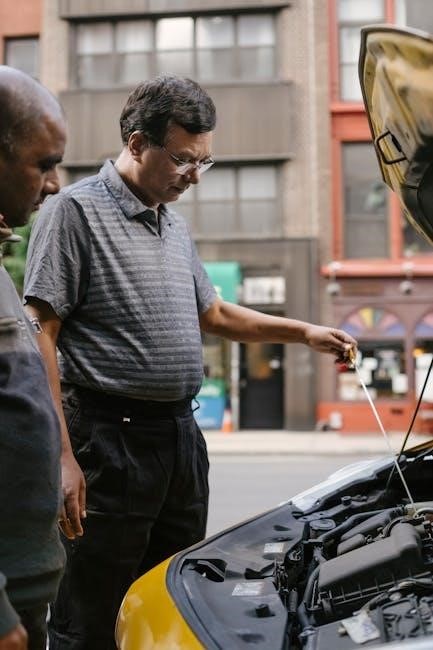
Checking Headlamp Functionality ー Initial Inspection
Begin by visually inspecting lenses for damage and then test both low and high beam operation, referencing the vehicle’s manual for guidance.
Visual Inspection for Damage (Lenses, Housings)
A thorough visual inspection is the first step in assessing headlamp functionality. Carefully examine the headlamp lenses for any cracks, chips, or excessive hazing, as these can significantly reduce light output and create glare for oncoming drivers. Look closely at the housings themselves, checking for signs of corrosion, damage from impacts, or loose mounting points. Ensure all seals are intact to prevent moisture from entering, which can lead to internal damage and failure.
Pay particular attention to any discoloration of the lenses, as this indicates UV degradation and reduced clarity. If damage is detected, consult your vehicle’s owner’s manual for recommended repair or replacement procedures. Ignoring even seemingly minor damage can compromise safety and potentially lead to more extensive and costly repairs down the line. Remember, maintaining clear and undamaged headlamps is crucial for optimal visibility and safe driving conditions.
Testing Headlamp Operation (Low Beam, High Beam)
After the visual inspection, systematically test the operation of both low and high beam headlamps. With the vehicle parked in a safe location, turn on the ignition and activate the low beam setting. Verify that both lamps illuminate with consistent brightness. Next, switch to the high beam setting and confirm that both high beams function correctly, providing a significantly brighter and further-reaching light pattern.
Observe for any flickering, dimming, or inconsistent illumination from either lamp. If any abnormalities are detected, consult your vehicle’s owner’s manual for troubleshooting steps or potential fuse locations. It’s also important to check if the in-cab adjustment device is working as intended. Proper functionality of both low and high beams is essential for optimal visibility and safe driving, especially in low-light conditions.

Headlamp Alignment and Aiming Procedures
Accurate headlamp alignment ensures optimal visibility and avoids blinding oncoming drivers; always refer to the vehicle’s owner’s manual for specific aiming instructions.
Why Proper Alignment is Crucial
Maintaining correct headlamp alignment is absolutely vital for safe driving conditions, extending beyond simply meeting legal requirements. Misaligned headlamps can significantly reduce visibility, especially at night or during inclement weather, increasing the risk of accidents. Conversely, excessively high beams can blind oncoming traffic, creating a dangerous situation for all road users.
Proper alignment ensures the light is directed onto the roadway, maximizing illumination where it’s needed most. The vehicle-positioning LINE LASER, as referenced in SER Manuals, aids operators in precisely positioning the headlamp perpendicular to the vehicle. Always adhere to the manufacturer’s instructions, as alignment procedures vary between vehicle makes and models.
Furthermore, consistent alignment contributes to driver comfort and reduces eye strain. Regularly checking and adjusting headlamps, guided by the owner’s manual, is a proactive safety measure that benefits both the driver and others on the road. Ignoring alignment can compromise the effectiveness of the entire headlamp system.
Using Manufacturer’s Instructions for Aiming
Accurate headlamp aiming necessitates strict adherence to the vehicle manufacturer’s specific instructions, as procedures differ significantly between models. The owner’s manual is the primary resource for this information, often including detailed diagrams and step-by-step guides. Ignoring these guidelines can result in improperly aimed lights, compromising visibility and potentially blinding other drivers.
SER Manuals emphasize the importance of precise positioning, referencing tools like the LINE LASER for perpendicular alignment. These manuals often detail specific aiming heights and angles. Before beginning, ensure the vehicle is parked on a level surface and properly loaded, simulating typical driving conditions.
Always verify the in-cab adjustment device functions correctly before proceeding. The manual will explain how to interpret aiming patterns and make necessary adjustments. Remember, aiming should be performed in a well-lit area, and a second opinion can ensure accuracy and safety.

Utilizing the Vehicle’s Headlamp Adjustment Device
Locate the in-cab controls, detailed in your owner’s manual, to fine-tune headlamp height and direction for optimal visibility and safe driving conditions.
Locating the In-Cab Adjustment Controls
Finding the in-cab headlamp adjustment controls often requires a careful review of your vehicle’s owner’s manual; their location varies significantly between makes and models. These controls are typically situated on the dashboard, near the steering wheel, or sometimes integrated into the light switch itself. The manual will provide a specific diagram pinpointing the exact location for your vehicle.
Look for labeled knobs or switches, often with headlamp icons indicating their function. Some newer vehicles may utilize a digital interface accessed through the infotainment system for headlamp adjustment. It’s crucial to understand that these controls allow you to adjust both the vertical aim (up or down) and, in some cases, the horizontal direction of your headlamps. Always refer to the manual before making any adjustments, as incorrect settings can impair visibility or even dazzle oncoming drivers. Proper adjustment ensures optimal illumination of the road ahead, enhancing safety for you and others.
Adjusting Headlamp Height and Direction
Carefully adjust headlamp height and direction using the in-cab controls, always referencing your vehicle’s owner’s manual for specific instructions. Begin by parking on a level surface facing a wall. Rotate the height adjustment knob to raise or lower the beam, aiming for a point approximately 25 feet ahead. The manual will detail the correct aiming point for your vehicle.

For directional adjustments, if available, slightly shift the beam left or right to ensure symmetrical coverage. Remember, the goal is to maximize visibility without blinding oncoming traffic. Always verify your adjustments against the manufacturer’s recommendations. If the in-cab controls don’t function, or you’re unsure about the process, consult a qualified mechanic. Setting headlamps at mid-point, as suggested, is a good starting point before fine-tuning.
Consulting the Vehicle’s Owner’s Manual
The owner’s manual contains specific headlamp system information, diagrams, and troubleshooting guidance essential for correct operation and maintenance procedures.
Finding Specific Headlamp System Information
Locating detailed information about your vehicle’s headlamp system begins with a thorough review of the owner’s manual; it’s the primary resource for understanding its intricacies. Specifically, navigate to the section dedicated to lighting, often found within the “Maintenance” or “Operation” chapters. Look for subsections detailing headlamp types – halogen, LED, or HID – as each system requires unique attention.
The manual will outline specific procedures for checking bulb functionality, identifying potential issues, and understanding the vehicle’s adjustment capabilities. Pay close attention to diagrams illustrating the headlamp assembly and its components. Furthermore, the manual will reference the correct bulb types for replacement and provide guidance on accessing and replacing them safely. Remember, the SER Manual provides additional detailed information, particularly regarding advanced systems like line laser guided headlamp positioning, offering a deeper understanding of the technology.
Interpreting Headlamp System Diagrams
Vehicle owner’s manuals frequently include detailed diagrams of the headlamp system, crucial for understanding component locations and connections. These illustrations typically showcase the headlamp housing, bulb, reflector, and any associated wiring or fiber optic elements. Carefully study these diagrams to identify each part and its function within the overall system.
Pay attention to any callouts or labels indicating specific adjustment points or access panels for bulb replacement. The SER Manual diagrams, particularly those relating to line laser guided headlamp positioning, will be more complex, illustrating the laser alignment process. Understanding these diagrams allows for more effective troubleshooting and accurate adjustments, ensuring optimal headlamp performance and visibility. Referencing these visuals alongside the written instructions enhances comprehension and minimizes errors during maintenance or repair.

Advanced Headlamp Systems & Troubleshooting
Fiber optic and line laser systems require specialized knowledge; always consult the vehicle’s SER Manual for detailed troubleshooting steps and proper guidance.
Fiber Optic Headlamp Systems (Overview)
Fiber optic headlamp systems represent a significant advancement in automotive lighting technology, particularly within surgical and specialized vehicle applications. These systems utilize a central high-intensity light source, transmitting illumination through bundles of optical fibers to the headlamp housing. This design offers several advantages, including reduced weight, improved efficiency, and enhanced flexibility in headlamp styling.
However, troubleshooting these systems requires a different approach than traditional halogen or LED setups. Because the light source is remote, issues may stem from the fiber optic cables themselves – potential breakage, contamination, or misalignment. The central light source also needs individual assessment.
Crucially, the vehicle’s service manual (SER Manual) is indispensable for diagnosing and repairing fiber optic headlamp systems. It provides detailed schematics, component locations, and specific procedures for inspecting and replacing fiber optic cables, light sources, and associated control modules. Attempting repairs without this information can lead to further damage or compromised safety. Always refer to the manual for proper procedures.
Line Laser Guided Headlamp Positioning (SER Manual Reference)
Advanced headlamp aiming procedures, particularly for vehicles equipped with sophisticated lighting systems, often incorporate line laser guidance. This technique utilizes a projected laser line as a precise reference point for positioning the headlamp perpendicular to the vehicle’s centerline. The operator uses the laser as a guide, ensuring accurate alignment according to factory specifications.
The SER Manual is absolutely critical when employing this method. It details the specific laser positioning requirements for each vehicle model, including the correct distance, angle, and target surface. The manual will also outline the proper operation of the vehicle-positioning LINE LASER, ensuring it’s calibrated and functioning correctly.
Furthermore, the manual provides step-by-step instructions on interpreting the laser line’s position relative to the headlamp housing, and how to utilize the vehicle’s adjustment controls to achieve optimal aim. Ignoring the SER Manual’s guidance can result in misaligned headlamps, reducing visibility and potentially blinding oncoming drivers.
No Responses