
Strengthening your core is vital for alleviating and preventing lower back pain, improving function, and enhancing daily activities. Core exercises stabilize the spine.
Understanding the Connection Between Core and Back Pain
Lower back pain often stems from a weak core, impacting spinal support and stability. The core muscles – encompassing abdominals, back muscles, and pelvic floor – work synergistically to protect the spine. When these muscles are insufficient, the back bears excessive strain, leading to discomfort and potential injury.
Strengthening the core isn’t merely about achieving a sculpted physique; it’s about creating a natural brace for the spine. A robust core enhances functional ability, allowing for easier movement and reduced pain during daily activities. Rehabilitation programs frequently emphasize core strengthening to provide stabilization and prevent future episodes of back pain, improving overall quality of life.
The Role of Core Muscles in Spinal Support
Core muscles act as the body’s natural stabilizer, directly influencing spinal health. They provide essential support, maintaining proper posture and reducing stress on the vertebrae. Key muscles include the transversus abdominis, obliques, and multifidus, working together to control movement and prevent excessive strain.
A strong core enables efficient transfer of force throughout the body, improving balance and coordination. This is crucial for everyday tasks and physical activity. Strengthening these muscles isn’t just about abdominal exercises; it’s a holistic approach to spinal stabilization, contributing to pain reduction and improved functional ability, ultimately preventing future back pain episodes.
Basic Core Strengthening Exercises
Begin with comfortable exercises like pelvic tilts and abdominal bracing to gently activate core muscles, providing a foundation for spinal stabilization and pain relief.
Pelvic Tilts
Pelvic tilts are a foundational exercise for engaging your core and improving lower back stability. To perform a pelvic tilt, lie on your back with your knees bent and feet flat on the floor. Tighten your abdominal muscles and gently press your lower back into the floor, tilting your pelvis upward.
Hold this contracted position for approximately 10 seconds, focusing on maintaining core engagement throughout the duration. Slowly release, returning your lower back to a neutral position. Repeat this exercise 10 times, ensuring controlled movements.
This exercise is comfortable and helps build awareness of core muscle activation, crucial for supporting the spine and reducing lower back discomfort. It’s a gentle starting point for strengthening.
Abdominal Bracing
Abdominal bracing is a fundamental core stabilization technique. Imagine preparing for a punch to the stomach – that’s the feeling you want to achieve. Gently tighten your abdominal muscles as if bracing for impact, without holding your breath or excessively squeezing.
This isn’t about sucking in your stomach; it’s about creating a firm, supportive “corset” around your midsection. Maintain this bracing throughout daily activities and during other exercises.
Hold the brace for several seconds, focusing on keeping your back straight and your core engaged. Practice this technique regularly to improve spinal stability and reduce the risk of lower back pain. It’s a subtle yet powerful exercise.
Bird Dog Exercise
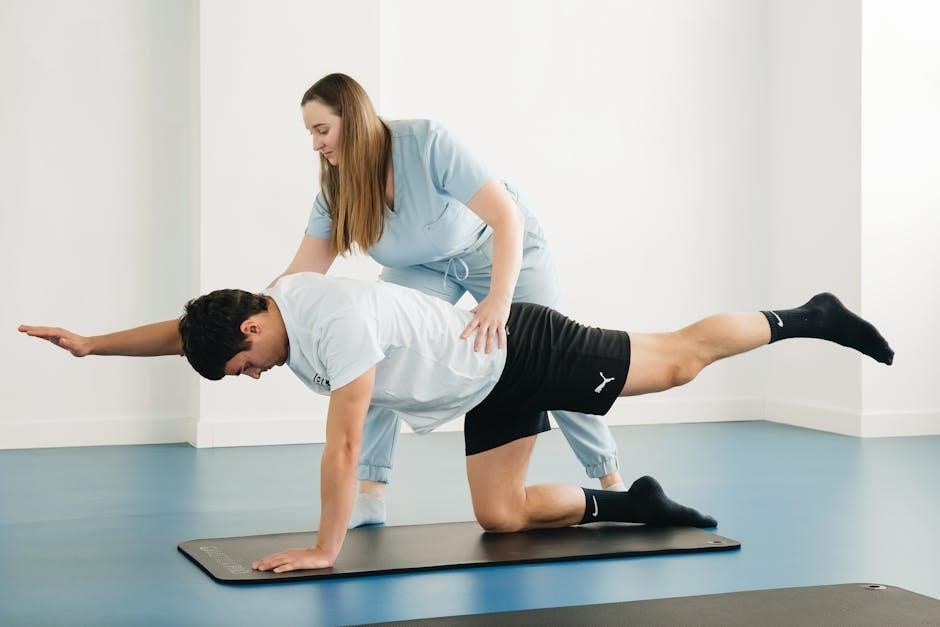
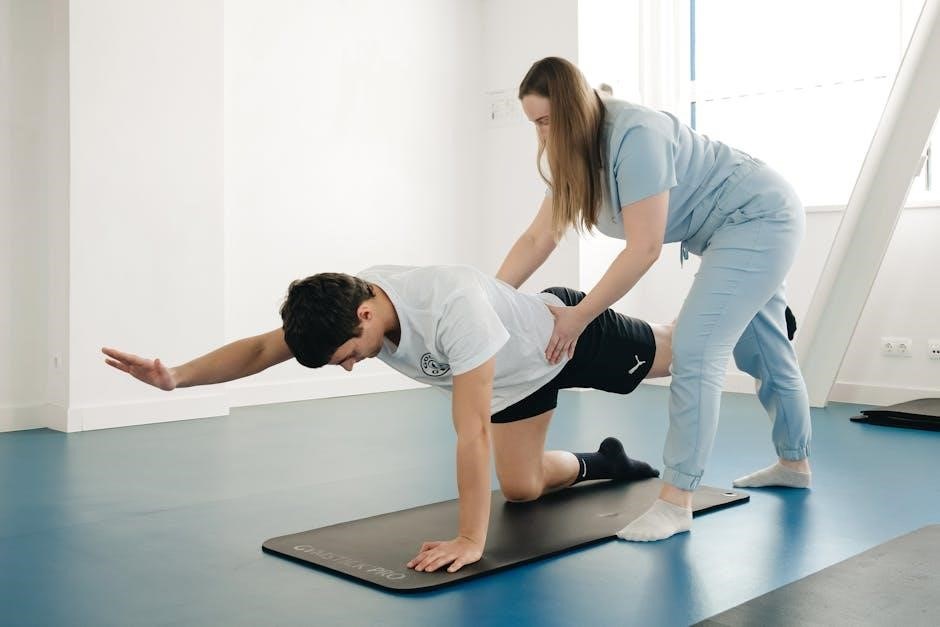
The Bird Dog exercise effectively enhances core stability and strengthens the lower back. Begin on your hands and knees, ensuring your hands are directly under your shoulders and your knees under your hips. Maintain a neutral spine throughout the movement.
Simultaneously extend one arm forward and the opposite leg backward, keeping your core engaged and your back flat. Avoid arching or rotating your spine. Hold this position briefly, then slowly return to the starting point.
Repeat on the other side. Focus on controlled movements and maintaining balance. This exercise improves coordination and strengthens the muscles supporting your spine, aiding in pain reduction.

Intermediate Core Strengthening Exercises
Progressing to intermediate exercises builds upon basic strength, incorporating planks, side planks, and dead bugs for enhanced spinal support and stability.
Plank Variations (Forearm Plank, High Plank)
Planks are foundational core exercises, offering variations to suit different fitness levels. The forearm plank engages the entire core, promoting spinal stability and reducing lower back strain. Maintain a straight line from head to heels, avoiding hip sagging or elevation.
The high plank, performed with straight arms, further challenges core strength and shoulder stability. Both variations require consistent abdominal bracing and proper form. Begin with shorter holds, gradually increasing duration as strength improves. Focus on maintaining a neutral spine throughout the exercise.
These exercises contribute to functional ability and help prevent low back pain by strengthening the muscles responsible for supporting the spine. Remember to prioritize proper technique over duration.
Side Plank
The side plank is an excellent exercise for strengthening the oblique muscles, crucial for spinal stability and preventing lower back pain. Begin by lying on your side, propping yourself up on your forearm, ensuring your elbow is directly beneath your shoulder.
Lift your hips off the ground, creating a straight line from head to feet. Engage your core and avoid letting your hips sag. For a modification, you can bend your bottom knee for added support. Hold the position, focusing on maintaining proper form and breathing steadily.
This exercise improves functional ability and contributes to a stronger, more resilient core, ultimately reducing the risk of future back pain episodes.
Dead Bug Exercise
The Dead Bug exercise is a fantastic way to activate your deep core muscles, particularly the transversus abdominis, which provides crucial spinal support. Lie on your back with knees bent at 90 degrees and arms extended towards the ceiling.
Slowly lower one arm and the opposite leg simultaneously, keeping your lower back pressed firmly into the floor. Maintain core engagement throughout the movement to prevent arching. Return to the starting position and repeat on the other side.
This controlled movement enhances core stability, improves coordination, and helps prevent low back pain by strengthening the muscles responsible for spinal stabilization.

Advanced Core Strengthening Exercises
Progress to challenging exercises like Russian Twists, Bicycle Crunches, and Supermans to further enhance core strength and spinal stability for pain relief.
Russian Twists
Russian Twists are an excellent advanced core exercise, effectively targeting the obliques and enhancing rotational strength. Begin by sitting with your knees bent and feet slightly elevated, maintaining a straight back. Lean back slightly, engaging your core, and hold a weight or keep your hands clasped.
Twist your torso from side to side, bringing your hands towards the floor on each side. Focus on controlled movements, avoiding jerky motions. This exercise improves spinal stability and helps prevent lower back pain by strengthening the muscles responsible for rotation and core control. Perform 15-20 repetitions on each side for optimal results, ensuring proper form throughout the exercise.
Bicycle Crunches
Bicycle Crunches are a dynamic advanced core exercise that effectively targets both the abdominal muscles and obliques. Begin by lying on your back with your knees bent and hands behind your head, supporting your neck. Bring your right elbow towards your left knee while extending your right leg.
Alternate sides, bringing your left elbow towards your right knee while extending your left leg. Focus on controlled movements and engaging your core throughout the exercise. This exercise enhances spinal stability and helps prevent lower back pain by strengthening the muscles responsible for flexion and rotation; Aim for 15-20 repetitions per side.
Supermans
Supermans are an excellent advanced exercise for strengthening the lower back muscles, including the multifidus, which are crucial for spinal support and stability. Lie face down with your arms and legs extended. Simultaneously lift your arms, chest, and legs off the ground, engaging your lower back muscles;
Hold this position for a few seconds, focusing on squeezing your back muscles, then slowly lower back down. This exercise helps improve posture and reduces the risk of lower back pain by strengthening the muscles that support the spine. Perform 10-15 repetitions, ensuring controlled movements to avoid strain.

Exercises Focusing on Specific Core Muscles
Targeted exercises activate the transversus abdominis, obliques, and multifidus, providing specialized spinal support and stability for lower back pain relief.
Transversus Abdominis Activation
The transversus abdominis (TVA) is your deepest abdominal muscle, acting like a natural corset for your spine. Activating it correctly is fundamental for lower back stability. Begin by lying on your back with knees bent and feet flat. Gently tighten your abdominal muscles as if bracing for a light punch, drawing your belly button towards your spine – without holding your breath or tilting your pelvis.
Focus on maintaining normal breathing throughout the exercise. You should feel a subtle tightening, not a forceful contraction. Hold this contraction for 5-10 seconds, then release slowly. Repeat 10-15 times. This exercise can be performed anywhere and is a cornerstone of many rehabilitation programs, concentrating on strengthening to stabilize the spine.
Oblique Strengthening Exercises
Strengthening your oblique muscles – those on the sides of your abdomen – is crucial for rotational stability and preventing lower back pain; A simple yet effective exercise is the side bend. Standing with feet shoulder-width apart, gently bend to one side, keeping your back straight and core engaged. Avoid bending forward or backward.
You can also perform seated oblique twists, holding a light weight or simply using your body weight. Remember to control the movement and avoid jerky motions. Focus on feeling the contraction in your oblique muscles. Performing 10-15 repetitions on each side will help improve core strength and spinal support, aiding in functional ability.
Multifidus Strengthening
The multifidus muscle, a small but vital group running along the spine, provides crucial stability and supports the lower back. Strengthening these muscles can significantly reduce pain and prevent future episodes. Bird dog exercises are excellent for targeting the multifidus. Start on your hands and knees, maintaining a neutral spine.
Simultaneously extend one arm forward and the opposite leg backward, keeping your core engaged and avoiding rotation. Hold for a few seconds, then return to the starting position and repeat on the other side. Focus on controlled movements and maintaining spinal alignment. Aim for 10-15 repetitions per side to enhance stabilization.

Creating a Core Strengthening Routine
Begin with a warm-up, progress through basic exercises, and finish with cool-down stretches. Consistency and gradual progression are key for optimal results.
Warm-up Exercises

Before initiating core strengthening, a proper warm-up is crucial to prepare your muscles and reduce the risk of injury. Begin with five to ten minutes of light cardiovascular activity, such as walking or marching in place, to increase blood flow.
Follow this with dynamic stretches that gently move your spine and core muscles. Examples include torso twists, cat-cow stretches, and gentle pelvic tilts. These movements enhance flexibility and range of motion.
Performing these preparatory exercises ensures your body is adequately prepared for the more demanding core work ahead, maximizing effectiveness and minimizing potential strain. Remember to listen to your body and avoid any movements that cause pain.
Cool-down and Stretching
Concluding your core strengthening routine with a cool-down is essential for gradually lowering your heart rate and preventing muscle soreness. Spend five to ten minutes performing light cardio, like slow walking, to aid recovery.
Follow this with static stretches, holding each stretch for 20-30 seconds. Focus on stretching the muscles you’ve worked, including your abdominal muscles, lower back, and hip flexors. Effective stretches include knee-to-chest stretches, spinal twists, and hamstring stretches.
Proper cool-down and stretching promote flexibility, reduce muscle tension, and enhance overall recovery, contributing to long-term back health and preventing future discomfort.
Frequency and Progression
Begin with core strengthening exercises two to three times per week, allowing for rest days between sessions to enable muscle recovery. Start with a manageable number of repetitions – perhaps 10-12 – for each exercise, focusing on maintaining proper form over quantity.
As your core strength improves, gradually increase the frequency, duration, or intensity of your workouts. This could involve adding more repetitions, sets, or progressing to more challenging exercise variations.
Listen to your body and avoid pushing yourself too hard, especially if you experience pain. Consistent, progressive overload is key to building a strong core and reducing lower back pain.

Important Considerations & Safety
Prioritize proper form during exercises to prevent injury. Modify exercises based on your fitness level, and seek professional guidance if pain persists or worsens.
Proper Form and Technique
Maintaining correct form is paramount when performing core strengthening exercises for lower back pain. Focus on engaging your deep abdominal muscles – imagine gently drawing your navel towards your spine. Avoid arching or rounding your back excessively during movements like pelvic tilts or bird dogs.
Controlled movements are key; avoid rushing through repetitions. For planks, ensure your body forms a straight line from head to heels, preventing sagging or hiking of the hips. Listen to your body and stop if you experience any sharp or increasing pain. Proper bracing of the abdominal muscles provides spinal stabilization, which is the primary goal. Incorrect form can exacerbate existing issues or create new ones, hindering progress and potentially causing injury.
Modifications for Different Fitness Levels
Core exercises should be adaptable to individual fitness levels. Beginners can start with modified planks on their knees instead of a full plank. Pelvic tilts can be performed with a smaller range of motion initially. For the bird dog, focus on maintaining a neutral spine and only extend one limb at a time.
Intermediate exercisers can progress to full planks, holding for longer durations. Advanced individuals can add resistance bands or weights to exercises like Russian twists. If an exercise causes pain, regress to an easier variation. Remember, comfort is crucial; these exercises should be comfortable to perform. Prioritize quality over quantity, and gradually increase intensity as strength improves.
When to Seek Professional Guidance
Consult a healthcare professional before starting any new exercise program, especially if you have pre-existing back pain or other medical conditions. Seek guidance if pain worsens during or after exercise, or if you experience numbness, tingling, or weakness in your legs or feet.
A physical therapist can assess your specific needs and create a tailored exercise plan. They can also ensure proper form and technique to prevent injury. Rehabilitation programs often focus on strengthening abdominal muscles for spine stabilization. Don’t hesitate to seek professional help; it can significantly improve outcomes and prevent further complications.

Resources for Further Information (PDFs & Guides)
Numerous reliable PDF guides detail core exercises for lower back pain, offering structured routines and proper form instructions for effective rehabilitation.
Finding Reliable PDF Guides on Core Exercises
Locating trustworthy PDF guides for core strengthening requires careful consideration. Prioritize resources from reputable medical institutions, physical therapy associations, or certified healthcare professionals. Look for guides that emphasize proper form and technique, detailing each exercise with clear instructions and illustrations.
Avoid guides promoting quick fixes or overly strenuous routines, especially if you’re new to core work or experiencing acute back pain. A good PDF will offer modifications for different fitness levels and caution against pushing through pain. Many university health centers and hospital websites offer downloadable PDFs specifically designed for lower back pain relief through core strengthening. Ensure the guide is current, as exercise recommendations evolve with research. Checking for author credentials and publication dates adds to the reliability of the resource.
Online Resources for Lower Back Pain Relief
Numerous online platforms offer valuable resources for lower back pain relief, complementing core strengthening exercises. Websites of organizations like the American Physical Therapy Association (APTA) provide evidence-based information and exercise demonstrations. Mayo Clinic and WebMD also feature comprehensive articles and videos on back pain management, including core stability.
YouTube channels hosted by qualified physical therapists can be incredibly helpful, visually guiding you through correct exercise form. Be cautious and verify the credentials of any online instructor. Look for resources that emphasize a holistic approach, combining exercise with lifestyle modifications and pain management techniques. Remember to consult your doctor before starting any new exercise program, especially if you have pre-existing conditions.
No Responses